
Concrete is widely used for foundations, columns, beams, slabs, and walls, but concrete and steel perform different roles within a reinforced concrete structure. Rebar for concrete provides the steel reinforcement needed where concrete alone cannot effectively resist tensile stresses.
For buyers, the important question is not simply which rebar to purchase. The required rebar grade, diameter, length, standard, and quantity can change depending on where the material will be used and what the project drawings require.
Why Is Rebar Used in Concrete?
Concrete is strong under compression but has limited tensile resistance. Rebar is embedded within the concrete to provide reinforcement where tensile stresses develop.
The two materials work together:
| Material | Main role in reinforced concrete |
|---|---|
| Concrete | Resists compression and forms the structural mass |
| Steel rebar | Provides tensile reinforcement and helps distribute structural stresses |
| Reinforced concrete | Combines the properties of both materials |
This is why steel rebar for concrete is used in structural elements such as foundations, columns, beams, and slabs rather than being added simply as a general strengthening material.
Rebar can also help control cracking under normal service conditions. However, the reinforcement arrangement must follow the structural design; simply increasing bar size does not automatically make a concrete structure suitable for a particular load.
Key point: Rebar selection should start with the project specification and reinforcement schedule, not with a general assumption that a larger bar is always better.
Where Is Rebar Used in Concrete Construction?
The application determines how reinforcement is arranged and what purchasing information needs to be confirmed.
| Concrete application | Typical rebar role | What buyers need to confirm |
|---|---|---|
| Foundations & footings | Structural reinforcement and load distribution | Grade, diameter, length, quantity |
| Columns | Longitudinal reinforcement and confinement | Bar size, grade, length, stirrup requirements |
| Beams | Tensile and shear-related reinforcement | Main bar sizes, stirrups, cutting/bending requirements |
| Slabs | Structural reinforcement and crack control | Diameter, spacing, mesh/bar arrangement |
| Walls | Structural reinforcement | Diameter, spacing, grade, wall design |
| Retaining structures | Reinforcement against structural stresses | Grade, size, corrosion/environmental requirements |
This is where rebar for concrete becomes an application-specific purchasing requirement rather than a generic steel product.
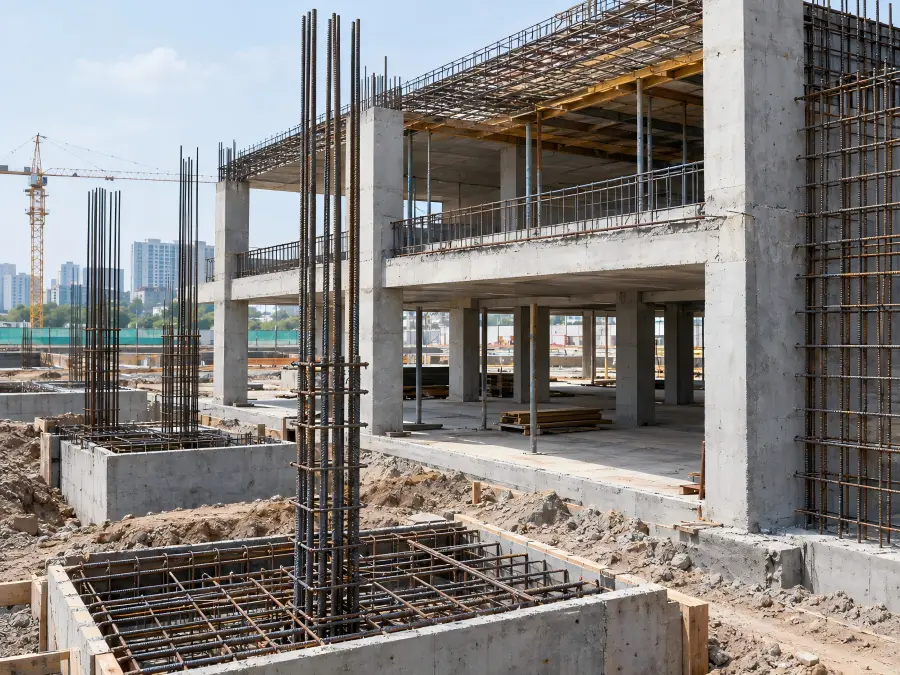
Rebar for Concrete Foundations and Footings
Foundations and footings transfer building loads to the supporting ground. Reinforcement is placed within the concrete to provide the required structural capacity.
For rebar for concrete foundations, buyers normally need to confirm:
- Required rebar diameter
- Steel grade and standard
- Standard bar length
- Total quantity
- Whether different diameters are required
- Any cutting or bending requirements
What matters in procurement?
Foundation orders often involve multiple rebar sizes rather than one uniform diameter. A project may therefore require a combination of main reinforcement and smaller bars for different structural elements.
The safest approach is to purchase according to the reinforcement schedule or bill of quantities instead of estimating quantities from the foundation area alone.
Rebar for Concrete Columns
Columns carry vertical loads and transfer them through the structural system. Their reinforcement typically includes longitudinal bars together with transverse reinforcement.
For rebar for concrete columns, the key purchasing information can include:
Main reinforcement
→ bar grade
→ diameter
→ length
→ quantity
Transverse reinforcement
→ bar diameter
→ spacing
→ required shape or bending
Column reinforcement is therefore more than simply choosing a rebar diameter. The supplied material must correspond to the reinforcement details shown in the structural drawings.
Rebar for Concrete Beams
Beams use reinforced concrete to carry loads across a span. Their reinforcement commonly includes longitudinal bars and transverse reinforcement.
For rebar for concrete beams, buyers should pay particular attention to:
- Main bar diameter and grade
- Number and length of bars
- Stirrups or transverse reinforcement
- Cutting and bending requirements
- Required quantities
Procurement tip: If beam reinforcement requires fabricated or bent bars, confirm whether the order is for straight rebar or processed reinforcement before requesting a quotation.
This distinction can affect both supply arrangements and shipping requirements.
Rebar for Concrete Slabs
Slabs are common in residential, commercial, and industrial buildings. Rebar provides reinforcement within the slab and helps control cracking under service conditions.
Typical applications include:
- Floor slabs
- Roof slabs
- Foundation slabs
- Industrial floor structures
For rebar for concrete slabs, buyers should not select bar size based only on slab thickness. The reinforcement schedule may specify different diameters, spacing, directions, and lengths.
For this reason, slab reinforcement orders are normally prepared from the project drawings or bill of quantities.
Rebar for Concrete Walls
Reinforced concrete walls can be used for structural walls, basement walls, retaining walls, and other concrete structures.
The reinforcement may run vertically and horizontally within the wall, with requirements varying according to wall dimensions and structural design.
When sourcing reinforcing bars for concrete walls, buyers should confirm:
- Bar diameter
- Grade
- Spacing requirements
- Bar length
- Quantity
- Any bending or fabrication requirements
For retaining or other exposed structures, environmental conditions may also influence the material specification and required protection.
How Does the Application Affect Rebar Selection?
One of the most common purchasing mistakes is treating all rebar for construction as interchangeable.
The application itself does not determine the complete specification, but it tells the buyer what information needs closer attention.
| Application | Main purchasing considerations |
|---|---|
| Foundations | Multiple diameters, grade, quantity, standard lengths |
| Columns | Main bars, transverse reinforcement, fabrication details |
| Beams | Main bars, stirrups, bending/cutting requirements |
| Slabs | Diameter, spacing, quantity, straight lengths |
| Walls | Vertical/horizontal reinforcement, spacing, quantity |
| Retaining structures | Structural requirements and service environment |
The final material specification should always follow the project’s engineering documents and applicable standard.
Choosing Rebar for Concrete Construction
Before placing an order, buyers should confirm five basic specifications.
1. Rebar Standard
Common standards for construction projects include:
- ASTM A615
- ASTM A706
- BS 4449
- EN 10080
- JIS G3112
- IS 1786
The applicable standard should come from the project specification rather than being selected only according to the supplier’s available stock.
2. Rebar Grade
Different projects can specify different grades according to structural requirements and local standards.
The grade should therefore be confirmed together with the applicable standard.
3. Rebar Diameter
Diameter is one of the most important ordering details.
Instead of requesting:
“50 tons of rebar”
a more useful purchasing request would specify:
standard + grade + diameter + length + quantity
For projects using several bar sizes, each size should be listed separately.
4. Bar Length and Processing
Standard straight lengths may be suitable for many projects, while others require:
- Cutting
- Bending
- Fabricated reinforcement
- Specific bar shapes
These requirements should be confirmed before quotation.
5. Quantity, Bundling and Shipment
For wholesale and export orders, buyers should also confirm:
- Total quantity
- Size breakdown
- Bundle requirements
- Marking
- Loading method
- Delivery destination
These details become particularly important when several rebar sizes are combined into one shipment.
Common Rebar Purchasing Mistakes
This is a section I strongly recommend keeping because it gives the article more practical value than a typical SEO article.
Mistake 1: Ordering by weight only
“100 tons of rebar” is not a complete material specification.
The order should identify the required standard, grade, diameter, length, and quantity.
Mistake 2: Choosing a standard after receiving the quotation
Different projects may require ASTM, BS, EN, JIS, or IS standards.
The applicable standard should be confirmed before sourcing.
Mistake 3: Assuming one diameter fits the entire project
Foundations, columns, beams, slabs, and walls can use different reinforcement sizes.
A project may require several diameters in the same order.
Mistake 4: Ignoring fabrication requirements
If the project requires bent or cut bars, purchasing straight bars without confirming processing requirements can create additional work after delivery.
Mistake 5: Checking material but not shipment requirements
For international orders, packaging, bundling, loading, and size consolidation can affect how easily the material is handled after arrival.
Rebar Supply for Construction Projects
For contractors, distributors, and project buyers, steel rebar for concrete can be sourced according to the required standard, grade, diameter, length, and quantity.
Project-based orders may involve multiple sizes and specifications within the same shipment. For export supply, bundling and loading arrangements should also be confirmed according to the destination and handling requirements.
When requesting a quotation, buyers can provide:
Standard → Grade → Diameter → Length → Quantity → Processing requirements → Destination
This gives the supplier enough information to check availability and prepare a more accurate commercial offer.
For available specifications and supply options, see the [Steel Rebar] product page.
For project or wholesale requirements, buyers can [contact the sales team] with their required specifications.
Conclusion
Rebar for concrete is used across foundations, footings, columns, beams, slabs, walls, and other reinforced concrete structures. The application determines what needs to be considered, but the final specification should always come from the project’s engineering requirements.
For buyers, a complete rebar request should normally include the standard, grade, diameter, length, quantity, and any processing or shipment requirements. Providing these details at the sourcing stage makes it easier to match the material with the construction project and avoid unnecessary changes after ordering.
FAQ
What is rebar used for in concrete?
Rebar provides steel reinforcement within concrete, helping reinforced concrete resist tensile stresses and support structural loads.
What is the difference between rebar for concrete and general steel rebar?
Rebar for concrete refers specifically to reinforcing bars intended for use within reinforced concrete structures. The required grade, size, and standard depend on the project specification.
What size rebar is used for concrete?
There is no single standard size for all concrete applications. Rebar diameter depends on the structural element, engineering design, applicable standard, and reinforcement schedule.
What information should I provide when buying rebar?
A complete inquiry should normally include the standard, grade, diameter, length, quantity, processing requirements, and delivery destination.