Mining and heavy equipment are continuously exposed to rock, ore, gravel, sand and other abrasive materials. Buckets, truck bodies, chutes, hoppers, crusher liners and other components can experience rapid wear under repeated abrasion and impact.
Wear resistant steel for mining is used for components exposed to demanding wear conditions, helping extend service life and reduce replacement frequency. For buyers, grade, hardness, thickness, impact conditions and fabrication requirements should be considered together when selecting wear resistant steel plate.
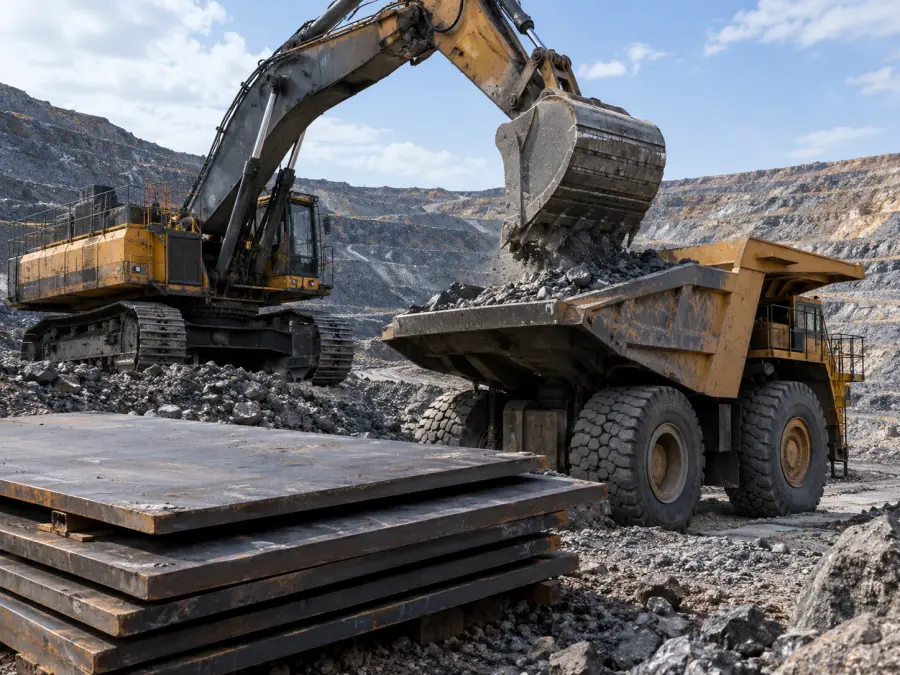
Wear Resistant Steel Applications in Mining and Heavy Equipment
Mining wear plates are commonly used on equipment and components exposed to continuous material contact, sliding abrasion or impact.
| Equipment / Component | Main Wear Conditions | Typical Applications |
|---|---|---|
| Excavators | Abrasion and impact | Buckets, side plates, wear components |
| Wheel Loaders | Abrasion and loading | Bucket floors and wear parts |
| Mining Trucks | Impact and abrasion | Body floors, liners and side sections |
| Crushers | Severe abrasion and impact | Crusher liners and wear components |
| Hoppers | Impact and material flow | Hopper liners and receiving surfaces |
| Chutes | Sliding abrasion | Chute liners and transfer areas |
| Conveyors | Continuous abrasion | Transfer points and liner plates |
| Quarry Equipment | Abrasion and impact | Material-contact wear components |
The same wear resistant steel plate for mining can be processed into different components according to equipment design and operating conditions. For replacement liners and fabricated wear parts, buyers can also provide drawings or finished dimensions when requesting supply.
Wear and Abrasion Conditions in Mining
Mining equipment does not experience the same type or severity of wear in every application. The main operating conditions should be considered when selecting abrasion resistant steel for mining.
Abrasive Wear
Abrasive wear occurs when hard materials such as ore, rock, gravel and sand move against a steel surface. It is common in chutes, hopper liners, conveyor transfer areas, truck bodies and other material-handling components.
For these applications, abrasion resistant steel can provide greater resistance to surface wear than conventional structural steel.
Impact Wear
Large or heavy materials can strike steel surfaces during loading, crushing or material transfer. Excavator buckets, loader buckets, truck bodies, crushers and hoppers may experience both impact and abrasion.
In these conditions, hardness should be considered together with toughness and the fabrication requirements of the component.
Common NM Wear Resistant Steel Grades
For mining and heavy equipment applications, NM wear resistant steel is commonly selected for components exposed to abrasion and impact.
| Grade | Typical Hardness | Common Thickness* | Typical Applications |
|---|---|---|---|
| NM400 | 360–420 HBW | 3–100 mm | General wear parts, buckets, chutes |
| NM450 | 420–480 HBW | 4–80 mm | Wear plates, liners, abrasion and impact components |
| NM500 | 470–540 HBW | 5–60 mm | Severe-wear components, crusher liners, heavy-duty wear parts |
*Typical reference ranges only. Actual hardness and available thickness depend on the applicable specification, plate thickness, supply condition and supplier availability.
NM400 Wear Resistant Steel
NM400 is commonly selected for general and moderate-to-demanding wear applications. Typical uses include mining equipment, excavator and loader buckets, chutes, hoppers and other wear components.
It is suitable for applications where wear resistance needs to be balanced with toughness and fabrication requirements.
NM450 Wear Resistant Steel
NM450 is suitable for applications requiring a higher level of wear resistance, particularly where abrasion is combined with moderate impact.
Common uses include wear plates, liners, mining machinery and heavy equipment components exposed to demanding material contact.
NM500 Wear Resistant Steel
NM500 is intended for more severe abrasive conditions where higher hardness and wear resistance are required.
Typical applications include crusher liners, mining wear plates, buckets and other heavy-duty components subject to continuous material wear.
How to Choose Wear Resistant Steel for Mining
Selecting wear resistant steel for mining equipment should start with the actual working conditions rather than hardness alone.
Material and Abrasion Severity
Consider the material being handled, such as iron ore, coal, rock, gravel or sand. Material hardness, particle size and movement can affect the rate of steel wear.
More abrasive materials and continuous material flow may require a higher wear resistance grade.
Impact Conditions
Some components mainly experience sliding abrasion, while others are repeatedly exposed to heavy impact.
Buckets, crushers, hoppers and truck bodies may experience combined abrasion and impact. The selected grade should therefore provide an appropriate balance of hardness and toughness for the working conditions.
Thickness and Fabrication Requirements
Plate thickness should be selected according to equipment design, expected wear allowance, structural requirements and service conditions.
Buyers should also confirm whether the plate requires cutting, profiling, drilling, bending or welding. Fabrication requirements can affect the suitable grade and processing method, particularly for thicker or higher-hardness wear plates.
Welding of wear resistant steel requires appropriate control of preheating, hydrogen level and heat input. Requirements vary with grade, plate thickness and welding procedure, with higher-hardness grades such as NM500 generally requiring greater attention to welding conditions.
Buying NM Wear Resistant Steel Plate
When sourcing mining wear plates or wear resistant steel for heavy equipment, buyers should provide the main specifications needed for material supply and processing.
- Grade: NM400, NM450, NM500 or other required specification
- Thickness: Required plate thickness
- Dimensions: Width × length or finished cutting dimensions
- Quantity: Total weight, number of plates or project quantity
- Application: Equipment type and wear conditions
- Processing: Cutting, profiling, drilling or other requirements
- Documentation: MTC or inspection documents when required
- Packaging: Bundling, marking and export packing requirements
- Delivery: Destination and preferred shipment terms
For fabricated liners or replacement wear parts, drawings and finished dimensions can help confirm material requirements and processing arrangements before supply.
FAQs About Wear Resistant Steel for Mining
What is NM400 wear resistant steel used for?
NM400 is commonly used for mining equipment, buckets, chutes, hoppers, liners and other components exposed to abrasion and moderate impact.
What is the difference between NM400 and NM500?
NM400 and NM500 belong to different hardness classes. NM500 provides higher hardness and is generally considered for more severe abrasive wear, while NM400 offers a balance of wear resistance, toughness and fabrication suitability.
Is wear resistant steel suitable for mining equipment?
Yes. Wear resistant steel is commonly used for components exposed to abrasion and impact, including mining buckets, truck bodies, crusher liners, chutes, hoppers and other material-handling parts. The appropriate grade depends on the actual working conditions.
Source NM Wear Resistant Steel for Mining Equipment
If you are sourcing wear resistant steel for mining or heavy equipment, provide the required NM grade, plate thickness, dimensions, quantity and application details.
Supply can be arranged for NM400, NM450 and NM500 wear resistant steel plates, with cutting and other processing options discussed according to grade and order requirements.
Contact us for a quotation with your material specification, plate dimensions, quantity and delivery requirements.