Steel plates for construction are widely used in building structures, structural connections, support components and other fabricated parts. Depending on the project, they can be supplied in different grades, thicknesses, widths and lengths to meet structural and fabrication requirements.
For construction projects, buyers typically consider more than the steel grade alone. Plate thickness, dimensions, material standard, availability, processing requirements, documentation and delivery can all affect whether the material is suitable for the project.
How Are Steel Plates Used in Construction?
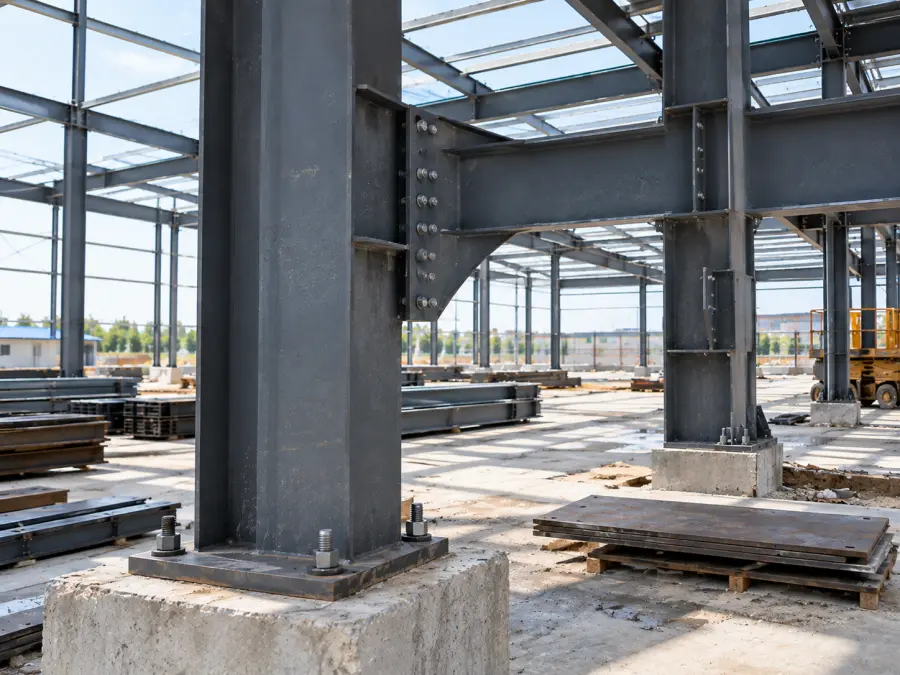
Steel plate is a practical material for structural components that require a flat, strong and fabricable steel section. Unlike beams and channels, which are normally used as primary structural members, plates are often incorporated into connections, supports, bases and fabricated structural components.
Common uses of steel plates in construction include:
- Base plates for steel columns and structural supports
- Connection plates used to join structural members
- Gusset plates for reinforcing and connecting steel members
- Support plates and brackets for structural assemblies
- Stiffening and reinforcing plates used in fabricated components
- Other custom-cut steel components specified by construction projects
The required steel plate for construction depends on the structural design, applicable material standard and fabrication method. Thickness and dimensions are also selected according to the project specification rather than using one standard size for every application.
Common Applications of Steel Plates in Construction
Building Structures and Structural Components
In building construction, steel plates are commonly used together with structural sections such as H beams, I beams, channels and angles.
They can be incorporated into column base plates, connection plates, gusset plates, brackets, supports and reinforcing components. These applications are common in steel-framed buildings where individual members need to be connected, supported or locally reinforced.
For general building projects, construction steel plate is often purchased according to a specified grade and thickness, then cut or processed to the required dimensions for fabrication.
Warehouses, Workshops and Industrial Buildings
Steel plates are also widely used in warehouses, workshops and other industrial or commercial buildings. These projects often contain steel frames and fabricated assemblies that require plates for structural connections and support points.
Typical applications include column bases, structural connections, support brackets, gusset plates and reinforcing components. Compared with highly specialized infrastructure projects, these building applications generally involve more standard steel grades, dimensions and procurement requirements.
For buyers sourcing steel plates for construction sites, availability of the required sizes, consistent material specifications and practical delivery arrangements can be important considerations alongside the material grade.
Common Steel Plate Grades for Construction
The appropriate grade depends on the applicable construction standard, structural requirements and project specification. Common options include general structural grades as well as higher-strength structural steel.
| Steel Plate Grade | Standard | Typical Yield Strength | Typical Construction Use |
|---|---|---|---|
| ASTM A36 | ASTM | ≥ 250 MPa | Base plates, connection plates, brackets |
| ASTM A572 Gr 50 | ASTM | ≥ 345 MPa | Higher-strength structural components |
| S235JR | EN | ≥ 235 MPa | Building structures, supports |
| Q235B | GB | ≥ 235 MPa | General construction and fabrication |
| Q355 | GB | ≥ 355 MPa | Higher-strength structural components |
ASTM A36, S235JR and Q235B are commonly specified for general structural applications under their respective standards. See the relevant ASTM A36 Steel Plate, S235JR Steel Plate and Q235B Steel Plate product pages for available supply specifications.
Where a project specifies higher-strength structural steel, ASTM A572 Grade 50 Steel Plate or Q355 may be considered according to the applicable standard and engineering requirements.
The grades above should not be treated as direct equivalents. The required grade should always follow the project’s drawings, specifications and applicable material standard.
How to Select Steel Plate for Construction
Selecting the right steel plate for the construction industry starts with the project specification rather than the material name alone.
Steel Grade and Standard
Confirm the required material standard and grade before ordering. Construction projects may specify ASTM, EN, GB or another applicable standard depending on the project location and engineering requirements.
Plate Thickness and Dimensions
Thickness, width and length should match the structural design and fabrication requirements. Standard dimensions may be suitable for some projects, while other applications require specific plate sizes or cutting.
Processing Requirements
If the plates will be fabricated into base plates, connection plates, gusset plates or other components, buyers should confirm whether cutting, drilling, profiling or other processing is required before shipment.
Availability and Quantity
For construction projects, practical availability can affect delivery planning. Confirm the required quantity and whether the requested thickness and dimensions can be supplied within the project schedule.
Documentation and Delivery
Material documentation should match the project requirements. Depending on the order, buyers may require a Mill Test Certificate (MTC) or other material documentation.
Export packing, loading and delivery arrangements should also be considered when purchasing steel plates for an overseas construction project.
Buying Steel Plates for Construction Projects
When sourcing steel plates for construction, buyers can provide the required grade and standard together with thickness, width, length, quantity, processing requirements and destination.
Supply can then be coordinated according to the project specification, including standard or cut-to-size plates, processing, export packing and delivery arrangements where required.
For building contractors, steel fabricators, distributors and project buyers, consolidating different plate sizes into one order can also help simplify procurement when several structural components are required.
Request Steel Plate Supply for Your Construction Project
If you are sourcing steel plates for construction projects, send your material requirements or plate list for review.
Provide the required grade, standard, thickness, dimensions and quantity, and the supply can be checked according to your project requirements.