When comparing A36 vs 1018 steel, the key differences are found in their specifications, chemical composition, mechanical properties, machinability and typical applications. Both are low-carbon steels, but they are specified and commonly supplied for different purposes.
A36 is primarily used for structural steel products and welded fabrication, while 1018 is widely used for machined components and general engineering applications. Understanding the difference between A36 and 1018 helps buyers select a material based on the required product form, strength, fabrication method and end use.
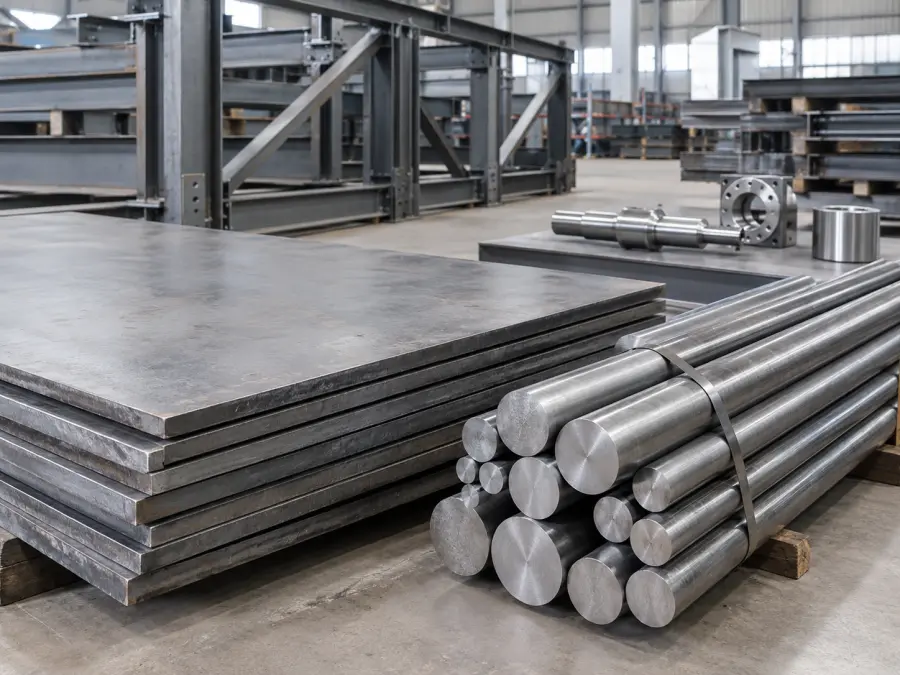
A36 vs 1018 Steel Comparison
The following table provides a practical A36 vs 1018 steel comparison for common procurement and fabrication considerations.
| Property | ASTM A36 | AISI 1018 |
|---|---|---|
| Steel type | Carbon structural steel | Low-carbon steel |
| Common product forms | Plate, sheet, bar and structural products | Bar, rod and machining stock |
| Carbon content | Up to about 0.26% | About 0.15–0.20% |
| Yield strength | Minimum 36 ksi (250 MPa) for applicable products | Depends on product form and condition |
| Tensile strength | Typically 58–80 ksi (400–550 MPa) | Depends on product form and condition |
| Machinability | Good | Very good |
| Weldability | Good | Good |
| Typical applications | Structural frames, plates and welded fabrication | Shafts, pins, machined parts and general components |
The comparison should be based on the applicable product standard and supply condition. In particular, 1018 steel properties can vary depending on whether the material is hot rolled, cold drawn or supplied in another condition.
A36 vs 1018: Chemical Composition
The A36 vs 1018 chemical composition comparison shows that both materials are low-carbon steels, but their specified chemistry is not identical.
| Element | ASTM A36 | AISI 1018 |
|---|---|---|
| Carbon (C) | ≤ 0.26% | 0.15–0.20% |
| Manganese (Mn) | Commonly 0.80–1.20% | 0.60–0.90% |
| Phosphorus (P) | ≤ 0.04% | ≤ 0.04% |
| Sulfur (S) | ≤ 0.05% | ≤ 0.05% |
Carbon content is one factor in the A36 and 1018 steel difference, but it should not be used alone to determine whether one grade can replace the other. The applicable material specification, product form and mechanical requirements also need to be considered.
A36 vs 1018: Strength and Mechanical Properties
A36 vs 1018 strength is one of the most important comparison points, but there is no single strength value that applies to every 1018 product.
For applicable A36 products, the specified minimum yield strength is 36 ksi (250 MPa), with typical tensile strength requirements of 58–80 ksi (400–550 MPa).
For 1018, yield and tensile strength depend more strongly on product form and material condition. Cold-drawn 1018, for example, can have different mechanical properties from hot-rolled 1018.
| Mechanical Property | ASTM A36 | AISI 1018 |
|---|---|---|
| Yield strength | Min. 36 ksi / 250 MPa for applicable products | Condition-dependent |
| Tensile strength | Typically 58–80 ksi / 400–550 MPa | Condition-dependent |
| Hardness | Generally moderate | Varies with condition |
| Mechanical properties | Defined by applicable A36 requirements | Depend on product form and condition |
Therefore, when comparing A36 vs 1018 properties, buyers should check the actual product specification rather than assuming that one grade is universally stronger.
For structural plate procurement, the applicable A36 steel plate specification, thickness and required mechanical properties should be confirmed before ordering. Buyers looking for bar stock can review the available 1018 steel bar specifications and supply options.
A36 vs 1018: Machinability and Weldability
The A36 vs 1018 machinability comparison is particularly relevant when the material will undergo turning, drilling, milling or other machining operations. 1018 is commonly selected for machined components because of its good machinability and widespread availability in bar form.
A36 also provides good machinability for general fabrication, but it is more commonly specified where structural plate, frames, supports or welded steel structures are required.
For A36 vs 1018 weldability, both are generally suitable for welding because of their relatively low carbon content. Welding procedures should still consider material thickness, joint design, welding process and project requirements.
The practical distinction is therefore:
- Structural fabrication: A36 is commonly specified for plates and structural components.
- Machined components: 1018 is commonly considered for shafts, pins and similar parts.
- Welded fabrication: Both can be welded using suitable procedures.
A36 vs 1018: Applications and Uses
The typical A36 vs 1018 applications reflect the different ways these steels are commonly specified and supplied.
| Application | ASTM A36 | AISI 1018 |
|---|---|---|
| Structural steel fabrication | ✓ | — |
| Structural plates | ✓ | — |
| Building frames and supports | ✓ | — |
| Welded steel structures | ✓ | ✓ |
| General fabrication | ✓ | ✓ |
| Machined components | — | ✓ |
| Shafts and pins | — | ✓ |
| General engineering components | — | ✓ |
A36 is commonly used for structural plates, supports, frames and general welded steel fabrication. 1018 is more commonly used where a low-carbon steel with good machinability is required, particularly for bars and machined components.
This difference in typical A36 vs 1018 uses is important when selecting a product for procurement. The required material form—such as plate, bar or rod—should be confirmed together with the grade and mechanical requirements.
Can A36 and 1018 Steel Be Used Interchangeably?
A36 and 1018 should not be treated as directly equivalent or automatically interchangeable materials.
Although both are low-carbon steels, they have different specifications, product forms and mechanical requirements. A material substitution should therefore be based on the requirements of the specific application rather than simply comparing carbon content.
When considering whether 1018 can substitute for A36, or vice versa, buyers should confirm:
- Material standard and grade
- Product form and dimensions
- Yield and tensile strength requirements
- Chemical composition
- Machining or welding requirements
- Applicable project or design specifications
For example, an A36 structural plate requirement should not automatically be replaced with 1018 simply because both materials contain relatively low levels of carbon.
A36 vs 1018: Which Steel Should You Specify?
The appropriate choice depends on the intended application and required material properties.
| Requirement | Commonly Considered Material |
|---|---|
| Structural plate | A36 |
| Steel frames and supports | A36 |
| Welded structural fabrication | A36 |
| Machined shafts and pins | 1018 |
| Machined low-carbon components | 1018 |
| General metalworking | A36 or 1018, depending on requirements |
For structural steel procurement, A36 is commonly specified when the project requires ASTM A36 plate or structural products. For machined components, 1018 may be considered when its product form and mechanical condition meet the design requirements.
The key difference between A36 and 1018 is therefore not limited to chemical composition. Their specifications, product forms, mechanical properties, fabrication characteristics and typical uses all need to be considered when selecting a material.
FAQ
Is A36 stronger than 1018?
The comparison depends on the specific 1018 product form and condition. A36 has defined minimum structural strength requirements, while 1018 mechanical properties can vary with supply condition.
Is A36 the same as 1018?
No. A36 and 1018 are different steel specifications with different chemical and mechanical requirements.
Can 1018 replace A36?
Not automatically. A 1018 product should only be considered as a substitute when its properties, product form and applicable requirements meet the needs of the specific application.
Which is easier to machine, A36 or 1018?
1018 is commonly preferred for machining, particularly in bar and cold-drawn forms. Actual machining performance depends on the material condition and processing requirements.