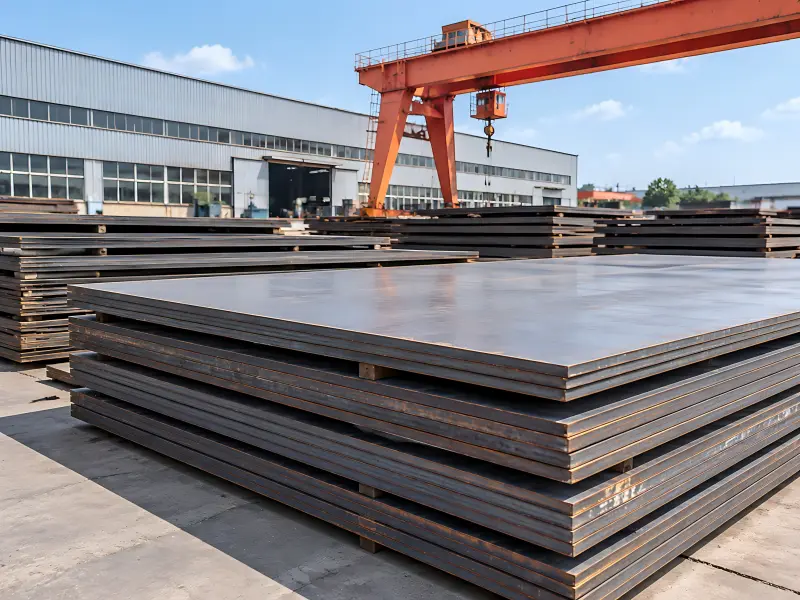
ASTM A283 Grade C and Grade D are carbon steel plate grades specified for general structural applications. Both offer good weldability and fabrication characteristics, but they differ in minimum yield strength, tensile strength and elongation requirements.
A283 Grade C steel is commonly used for general structural fabrication where moderate strength and good formability are required. Grade D has higher minimum strength requirements, making it an option when the specified mechanical properties call for a higher strength level.
This guide covers A283 Grade C material properties, its differences from Grade D, and commonly referenced Chinese steel grades for material comparison.
1. What Is ASTM A283 Grade C Steel?
ASTM A283 Grade C steel is a low and intermediate tensile strength carbon steel plate covered by ASTM A283/A283M. It belongs to the structural quality category and is intended for general applications where moderate strength, weldability and fabrication performance are required.
Compared with the other grades in the A283 specification, Grade C provides a balance of strength and ductility. It is commonly considered for:
- General structural steel fabrication
- Industrial equipment and supporting structures
- Welded steel components
- Storage tanks and non-code structural applications
- General engineering and metal fabrication
A283 Gr C steel is suitable for conventional cutting, forming and welding operations when appropriate fabrication procedures are followed. Its moderate strength level also makes it a practical choice for projects that do not require higher-strength structural steel.
The material should be specified according to the required ASTM standard, plate dimensions and mechanical properties rather than grade designation alone.
2. ASTM A283 Grade C Steel Properties
The mechanical properties and chemical composition of A283 Grade C steel determine its suitability for structural fabrication and other general engineering requirements.
Mechanical Properties
| Property | Requirement |
|---|---|
| Yield Strength | Min. 205 MPa |
| Tensile Strength | 380–515 MPa |
| Elongation (200 mm gauge length) | Min. 22% |
| Elongation (50 mm gauge length) | Min. 25% |
The yield strength indicates the stress at which permanent deformation begins, while tensile strength represents the maximum stress the material can withstand during a tensile test.
With a minimum yield strength of 205 MPa and tensile strength of 380–515 MPa, A283 Grade C steel properties are suitable for general structural applications that do not require higher-strength material specifications.
Chemical Composition
| Element | Maximum Content (%) |
|---|---|
| Carbon (C) | 0.24 |
| Manganese (Mn) | 0.90 |
| Phosphorus (P) | 0.030 |
| Sulfur (S) | 0.030 |
Silicon requirements depend on plate thickness: the maximum is 0.40% for plates up to 40 mm thick, while plates over 40 mm generally require 0.15–0.40%.
These values are reference requirements from the ASTM A283/A283M specification. Actual acceptance should be based on the applicable standard edition, plate thickness and material test certificate.
3. ASTM A283 Grade C vs Grade D: What Are the Differences?
A283 Grade C is the primary focus of this guide because of its suitability for general structural fabrication. Grade D is also worth considering when higher minimum yield and tensile strength are required. Although both grades belong to the same ASTM specification, they differ in their minimum strength and elongation requirements.
The following table summarizes their main mechanical property differences.
| Mechanical Property | Grade C | Grade D |
|---|---|---|
| Yield Strength (Min.) | 205 MPa | 230 MPa |
| Tensile Strength | 380–515 MPa | 415–550 MPa |
| Elongation (200 mm) | 22% | 20% |
| Elongation (50 mm) | 25% | 23% |
Key Differences Between the Two Grades
1. Strength
Grade D has a minimum yield strength of 230 MPa, compared with 205 MPa for Grade C. Its tensile strength range is also higher. This makes Grade D more suitable when the design requires the higher strength level specified for that grade.
2. Ductility
Grade C has higher minimum elongation requirements than Grade D. This indicates a greater specified elongation in tensile testing, which can be relevant when material deformation and forming requirements are considered.
3. Material Selection
The choice between A283 Grade C and Grade D should depend on the required mechanical properties, design conditions and applicable material specification.
- Choose Grade C when its strength requirements are sufficient and the higher specified elongation is preferred.
- Choose Grade D when the application requires its higher minimum yield and tensile strength.
Grade D should not automatically be considered a replacement for Grade C. The final selection must meet the project’s design and material requirements.
4. A283 Grade C Equivalent Grades: Chinese Steel References
When sourcing carbon steel plates from China, buyers may encounter Q235 and Q215 grades as potential comparison materials for ASTM A283 Grade C and Grade D.
However, ASTM A283 and GB/T 700 are different material standards. Their grade designations, chemical composition limits, mechanical properties and impact test requirements are not identical.
The following table provides preliminary comparison references rather than direct equivalencies.
| ASTM Grade | Chinese Grade for Comparison | Reference Standard | Comparison Notes |
|---|---|---|---|
| A283 Grade C | Q215B / Q235B | GB/T 700 | Compare yield strength, tensile strength and thickness requirements |
| A283 Grade D | Q235B / Q235C / Q235D | GB/T 700 | Check strength requirements and impact test conditions |
The actual comparison depends on the applicable standard edition and product thickness. In particular, the Q235 quality suffixes A, B, C and D relate to different quality and impact test requirements, not simply different strength levels.
Before considering a Chinese steel grade as a substitute for A283 Grade C or Grade D, buyers should verify:
- Yield and tensile strength at the specified thickness
- Chemical composition limits
- Elongation requirements
- Impact test requirements, where applicable
- Material certification and project approval conditions
A similar strength range does not establish full material equivalence. Any substitution should be reviewed and approved by the purchaser or responsible engineering authority.
5. What Should Buyers Check When Sourcing A283 Steel Plates?
When purchasing ASTM A283 steel plates in different grades, buyers should confirm the material requirements before requesting a quotation.
The key purchasing details include:
- Steel Grade: Specify ASTM A283 Grade C or Grade D.
- Plate Dimensions: Provide the required thickness, width and length.
- Quantity: Confirm the total tonnage or number of plates.
- Material Standard: Specify ASTM A283/A283M and the required edition.
- Certification: Confirm the need for a Mill Test Certificate (MTC) showing chemical composition and mechanical test results.
- Alternative Materials: If Chinese steel grades are being considered, confirm whether substitutions are permitted under the project specification.
Providing these details helps suppliers check material availability, suitable specifications and quotation requirements more accurately.
For buyers sourcing A283 carbon steel plates, confirming the grade, dimensions and certification requirements at the quotation stage helps avoid material mismatches during procurement and delivery.
Frequently Asked Questions
What is A283 Grade C steel?
A283 Grade C steel is a low and intermediate tensile strength carbon steel plate specified under ASTM A283/A283M. It is used for general structural applications and has a minimum yield strength of 205 MPa and a tensile strength range of 380–515 MPa.
What is the difference between A283 Grade C and Grade D?
Grade D has higher minimum yield strength (230 MPa) and tensile strength (415–550 MPa) than Grade C. Grade C has higher minimum elongation requirements, indicating greater specified ductility in tensile testing.
What is the yield strength of A283 Grade C steel?
The minimum yield strength of A283 Grade C steel is 205 MPa (30 ksi).
Is A283 Grade C equivalent to Q235B?
Q235B is sometimes used as a comparison grade for A283 Grade C, but the two materials are not fully interchangeable. Their chemical composition, mechanical properties and thickness-dependent requirements must be checked before substitution.
Is A283 Grade D stronger than Grade C?
Yes. A283 Grade D has a higher minimum yield strength and a higher tensile strength range than Grade C. However, Grade C has higher minimum elongation requirements.