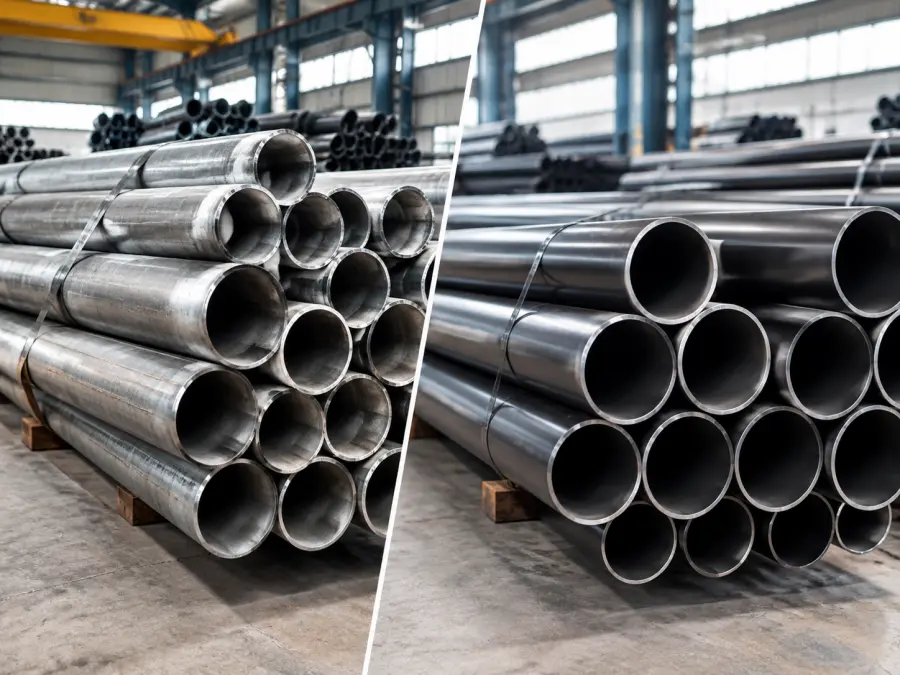
When purchasing carbon steel pipes, buyers often compare A53 vs A106 Pipe to determine which specification is suitable for their projects. Although both are ASTM carbon steel pipe standards, they are designed for different service conditions.
The main differences between ASTM A53 and ASTM A106 include manufacturing process, temperature capability, pressure service and typical applications. Choosing the right pipe standard helps avoid unnecessary costs and ensures reliable performance in the final application.
ASTM A53 vs A106 Pipe Comparison
| Item | ASTM A53 Pipe | ASTM A106 Pipe |
|---|---|---|
| Standard | ASTM A53 | ASTM A106 |
| Material | Carbon steel | Carbon steel |
| Pipe Type | Welded and seamless | Seamless |
| Common Grades | Grade A, Grade B | Grade A, Grade B, Grade C |
| Manufacturing | ERW, welded and seamless options | Seamless hot finished or cold drawn |
| Main Service | General pressure and mechanical applications | High-temperature pressure service |
| Temperature Capability | Normal operating conditions | Elevated temperature environments |
| Common Applications | Water, air, mechanical and structural piping | Steam, refinery, power and process piping |
What Is ASTM A53 Pipe?
ASTM A53 pipe is a carbon steel pipe specification commonly used for general pressure, mechanical and structural applications. It is available in welded and seamless forms, providing flexible options for different project requirements.
Typical applications include:
- Water and air piping systems
- Mechanical piping
- General industrial pipelines
- Structural applications
For buyers requiring carbon steel pipes for standard operating conditions, ASTM A53 carbon steel pipe is a commonly selected option due to its availability and wide application range.
What Is ASTM A106 Pipe?
ASTM A106 pipe is a seamless carbon steel pipe specification designed for high-temperature and high-pressure service applications. It is commonly used where piping systems operate under continuous heat and pressure conditions.
Typical applications include:
- Steam piping
- Refineries
- Power generation systems
- Chemical processing
- Oil and gas applications
For industrial projects requiring seamless pipe for demanding environments, ASTM A106 seamless steel pipe is widely specified because of its suitability for elevated temperature service.
Key Differences Between A53 and A106 Pipe
When evaluating A53 vs A106 Pipe, buyers usually focus on several key factors, including manufacturing process, temperature capability, pressure requirements and application suitability. The main difference between ASTM A53 vs A106 pipe is not only the material specification, but also the operating conditions each pipe standard is designed to handle.
Understanding the difference between A53 and A106 pipe helps purchasers select the right carbon steel pipe for their industrial, commercial and project requirements.
1. Manufacturing Process Difference
The manufacturing method is one of the most important factors in the A53 vs A106 steel pipe comparison.
ASTM A53 pipe is available in welded and seamless forms. Welded A53 pipe is commonly selected for general piping applications where supply flexibility, availability and cost efficiency are important.
ASTM A106 pipe is mainly supplied as seamless pipe. It is designed for applications where reliable performance under high temperature and pressure conditions is required.
For buyers comparing A53 vs A106 pipe, the manufacturing process is often the first consideration when selecting between general service pipe and high-performance industrial pipe.
2. Temperature and Pressure Requirements
Temperature and pressure conditions are key factors when choosing between A106 vs A53 pipe.
ASTM A53 pipe is commonly used for general pressure and mechanical piping systems under normal operating conditions.
ASTM A106 pipe is designed for high-temperature service and is widely used in systems requiring continuous operation under elevated temperature and pressure.
In practical purchasing decisions:
- Choose ASTM A53 pipe for general piping applications, mechanical systems and standard operating conditions.
- Choose ASTM A106 pipe for high-temperature, high-pressure and process piping systems.
3. Application Differences
The correct choice in the A53 vs A106 Pipe comparison depends on the final application, operating environment and project requirements.
| Application Requirement | Recommended Pipe |
|---|---|
| Water transportation systems | ASTM A53 pipe |
| Air piping systems | ASTM A53 pipe |
| General mechanical piping | ASTM A53 pipe |
| Structural and general industrial piping | ASTM A53 pipe |
| Steam piping systems | ASTM A106 pipe |
| High-temperature process piping | ASTM A106 pipe |
| Refinery piping | ASTM A106 pipe |
| Power generation piping | ASTM A106 pipe |
For buyers asking A53 vs A106 which pipe should I choose, ASTM A53 is usually suitable for general-purpose applications, while ASTM A106 is preferred for demanding industrial environments involving higher temperature and pressure.
A53 vs A106 Pipe: Which One Should You Choose?
For buyers comparing A53 vs A106 Pipe, the selection should be based on operating conditions rather than simply choosing the stronger option.
Choose ASTM A53 Pipe When:
- The application involves normal temperature conditions
- General industrial piping is required
- Welded or seamless options are acceptable
- Cost-effective supply is important
Choose ASTM A106 Pipe When:
- High-temperature service is required
- Pressure piping systems are involved
- Seamless pipe is preferred
- The project involves process industries, energy or oil and gas applications
Selecting the correct standard at the purchasing stage helps ensure better compatibility between the pipe material and the final operating environment.
ASTM A53 vs ASTM A106 Pipe Supply Considerations
Besides pipe standards, buyers should also consider:
- Pipe diameter
- Wall thickness
- Available grades
- Quantity requirements
- Inspection and documentation requirements
- Packing and transportation conditions
Available supply options can be provided according to project specifications, including commonly requested sizes, wall thicknesses and quantities.
Frequently Asked Questions
What is the difference between A53 and A106 pipe?
The main difference between A53 and A106 pipe is the intended service condition. ASTM A53 is generally used for standard pressure and mechanical applications, while ASTM A106 is designed for seamless high-temperature pressure service.
Is A106 better than A53 pipe?
Neither standard is universally better. ASTM A106 is more suitable for high-temperature and pressure applications, while ASTM A53 is commonly selected for general piping requirements.
Can ASTM A53 pipe replace ASTM A106 pipe?
ASTM A53 may be suitable for some general applications, but it is not normally selected as a replacement for A106 in systems requiring continuous high-temperature service.
Are ASTM A53 and ASTM A106 the same material?
Both are carbon steel pipe standards, but they have different manufacturing requirements and application purposes.
Conclusion
Choosing between A53 vs A106 Pipe depends on the application requirements rather than simply comparing material strength.
For general industrial piping, water systems and mechanical applications, ASTM A53 pipe provides a practical and widely available solution. For high-temperature and pressure-critical applications, ASTM A106 pipe is generally the preferred choice.
Contact our team for available specifications, supply options and project requirements.