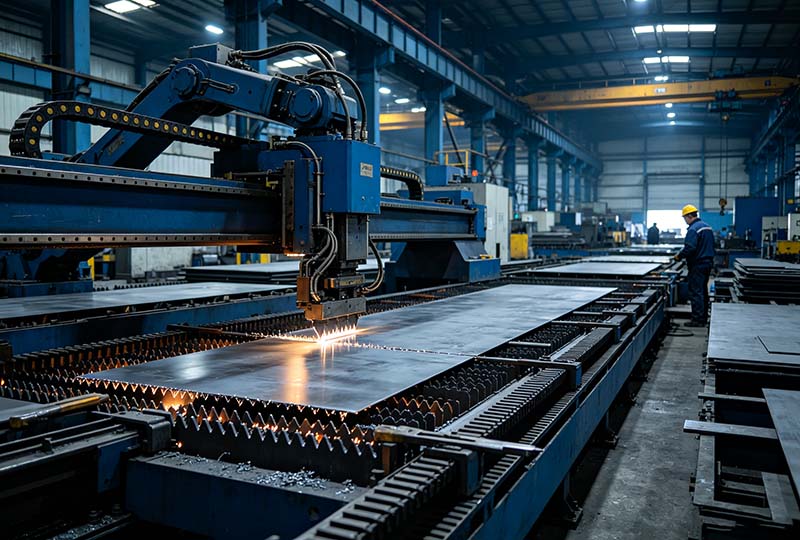
ASTM A36 steel plate is a widely specified carbon structural steel plate used for general construction, fabrication, industrial equipment, and infrastructure projects. Its combination of balanced strength, weldability, fabrication suitability, and broad market availability makes ASTM A36 steel plate a common choice for applications that require reliable structural material without a highly specialized grade.
A36 steel plate is commonly used for structural frames, supports, equipment bases, platforms, fabricated steel components, and other general-purpose structures. For purchasing, buyers normally need to confirm the A36 grade, plate thickness, width and length, applicable ASTM standard, surface condition, quantity, and delivery requirements before placing an order.
Common Applications of ASTM A36 Steel Plate
Construction and Structural Steel
One of the most common uses of A36 steel plate is in construction and structural steelwork. It can be fabricated into structural members, base plates, supports, brackets, connection components, and other load-bearing or secondary structural parts.
A36 is suitable for these applications because it offers a practical balance of strength and fabrication performance. Its weldability also makes it convenient for steel structures assembled through welding, cutting, drilling, and other common fabrication processes.
Typical applications include:
- Building structural frames
- Steel supports and brackets
- Base plates and connection plates
- Structural platforms
- Industrial building components
- General steel structures
Industrial Equipment and Machinery
ASTM A36 plate is also used in industrial equipment where steel is required for structural or supporting components rather than highly specialized wear or pressure applications.
Common examples include equipment bases, machine frames, support structures, mounting plates, brackets, and fabricated components. The material can be cut, drilled, formed, and welded according to the requirements of the finished component.
For equipment manufacturers and steel fabricators, A36 can therefore serve as a practical material for general-purpose structural parts.
Bridges and Infrastructure
A36 steel plate can be found in certain bridge and infrastructure applications, particularly in auxiliary structures, supports, platforms, brackets, base components, and other fabricated steelwork.
The specific grade requirements for major load-bearing bridge components depend on the project specification and applicable design standards. A36 should therefore be selected according to the engineering requirements rather than assumed to be suitable for every bridge component.
General Fabrication
General steel fabrication is another major application area for A36. Fabricators can use A36 plate to produce a wide range of components for construction, machinery, transportation-related structures, storage systems, and industrial projects.
Its broad use in fabrication is partly related to its availability in different plate sizes and thicknesses and its compatibility with common fabrication methods.
Why Is A36 Used for These Applications?
The popularity of A36 comes from its overall balance rather than from a single exceptional property.
Good weldability makes A36 convenient for welded structures and fabricated components.
Fabrication suitability allows the plate to be processed through common cutting, drilling, machining, and forming operations.
Balanced strength provides a practical solution for many general structural applications where an advanced high-strength grade is not required.
Widely specified means A36 is familiar to engineers, fabricators, distributors, and international steel buyers.
Broad availability also makes it easier to source A36 steel plate in commonly requested dimensions and quantities.
These characteristics make A36 a practical choice for general structural and fabrication work.
ASTM A36 Steel Plate Selection
When purchasing A36 steel plate, application requirements should be translated into clear order specifications. The most important points normally include:
- Thickness: Select according to structural or fabrication requirements.
- Width and length: Confirm required plate dimensions to reduce cutting and processing work.
- Standard: Specify ASTM A36 and any additional project requirements.
- Surface condition: Clarify whether standard hot-rolled surface or a particular surface requirement is needed.
- Quantity: Confirm total tonnage, plate count, and size distribution.
- Delivery requirements: Consider destination, shipping method, packing, and required delivery schedule.
For larger export orders, providing a complete size and quantity list helps the supplier check availability and prepare a more accurate quotation.
ASTM A36 Steel Plate for Export Orders
For international A36 steel plate procurement, buyers should confirm the applicable standard, dimensions, quantity, packing method, shipping requirements, and required commercial or quality documents before shipment.
For projects with multiple plate sizes, it is also useful to provide a detailed purchase list showing thickness, width, length, and quantity. This allows the exporter to arrange suitable stock and optimize loading for international transportation.
A36 is particularly practical for distributors, fabricators, contractors, and industrial buyers looking for a commonly specified structural steel plate for general applications.
Conclusion
ASTM A36 steel plate is mainly used for construction, structural steelwork, industrial equipment, infrastructure components, and general fabrication. Its widespread adoption comes from a useful combination of strength, weldability, fabrication suitability, and availability.
When selecting A36, the key consideration is not simply the grade itself, but whether the thickness, dimensions, standard, quantity, surface condition, and delivery requirements match the project.
Need ASTM A36 Steel Plate for your project? Contact CXYS for specifications and a quotation.