When comparing A992 vs A572 Grade 50 steel, both grades have a minimum yield strength of 50 ksi (345 MPa), but their requirements for mechanical properties and chemical composition differ. ASTM A992 is commonly specified for structural beams in building construction, while ASTM A572 Grade 50 covers a wider range of structural steel products.
For steel buyers, the key differences are material requirements, beam applications, and purchasing cost. Comparing these factors helps determine whether the specified grade meets project requirements before placing an order.
A992 vs A572 Grade 50: Key Differences at a Glance
| Comparison | ASTM A572 Grade 50 | ASTM A992 |
|---|---|---|
| Standard | ASTM A572/A572M | ASTM A992/A992M |
| Product Scope | Plates, bars, structural shapes and other covered products | Rolled structural shapes |
| Minimum Yield Strength | 50 ksi (345 MPa) | 50 ksi (345 MPa) |
| Minimum Tensile Strength | 65 ksi (450 MPa) | 65 ksi (450 MPa) |
| Maximum Yield Strength | No general Grade 50 limit | 65 ksi (450 MPa)* |
| Maximum Yield-to-Tensile Ratio | No equivalent general limit | 0.85* |
| Carbon Equivalent | No equivalent universal limit for all products | ≤ 0.45% or 0.47%* |
| Typical Beam Use | Structural shapes where permitted by design | Commonly specified for building W-shape beams |
For A992, the maximum yield strength may be 70 ksi (480 MPa) for specified web-tested shapes; the yield-to-tensile ratio may be 0.87. Carbon equivalent is limited to 0.45% for most shapes and 0.47% for shapes with flange thickness over 2 in. (50 mm).
Key difference: Both grades share the same minimum yield and tensile strengths, but A992 has additional controls on yield strength, yield-to-tensile ratio, and carbon equivalent.
A992 vs A572 Grade 50: Mechanical Properties
| Mechanical Property | ASTM A572 Grade 50 | ASTM A992 |
|---|---|---|
| Yield Strength | ≥ 345 MPa (50 ksi) | 345–450 MPa (50–65 ksi)* |
| Tensile Strength | ≥ 450 MPa (65 ksi) | ≥ 450 MPa (65 ksi) |
| Elongation in 8 in. (200 mm) | ≥ 18%* | ≥ 18%* |
| Elongation in 2 in. (50 mm) | ≥ 21%* | ≥ 21%* |
| Yield-to-Tensile Ratio | No general limit | ≤ 0.85* |
Elongation values apply to relevant structural shapes and standard specimen conditions. A992 has specified exceptions for shapes tested from the web. A maximum tensile strength of 90 ksi (620 MPa) applies when the relevant supplementary requirement is specified.
Both grades provide a minimum yield strength of 50 ksi, but A992 controls the upper yield strength and yield-to-tensile ratio. These requirements can matter when a project specifies A992 rather than A572 Grade 50.
A992 vs A572 Grade 50: Chemical Composition
| Element (wt. %) | ASTM A572 Grade 50 | ASTM A992 |
|---|---|---|
| Carbon (C) | ≤ 0.23%* | ≤ 0.23% |
| Manganese (Mn) | ≤ 1.35%* | 0.50–1.60%* |
| Phosphorus (P) | ≤ 0.040% | ≤ 0.035% |
| Sulfur (S) | ≤ 0.050% | ≤ 0.045% |
| Silicon (Si) | ≤ 0.40%* | ≤ 0.40% |
| Vanadium (V) | Depends on permitted alloy type | ≤ 0.15% |
| Columbium / Niobium (Nb) | Depends on permitted alloy type | ≤ 0.05%* |
| Copper (Cu) | ≥ 0.20% when copper steel is specified | ≤ 0.60% |
For A572 Grade 50, the listed carbon, manganese, and silicon limits depend on applicable section dimensions and standard provisions. For A992, manganese may have a lower minimum for certain thinner shapes, and the combined niobium plus vanadium content must not exceed 0.15%.
Key differences:
- Phosphorus and sulfur: A992 has lower maximum limits than the common A572 Grade 50 limits shown above.
- Manganese: A572 Grade 50 generally specifies a maximum for applicable shapes, while A992 specifies a range.
- Alloying elements: A992 controls vanadium, niobium, and their combined content.
- Carbon equivalent: A992 includes a specific carbon-equivalent limit, which is relevant to material control and weldability assessment.
Chemical composition alone does not determine weldability. The material certificate, section thickness, and welding procedure must also be considered.
A992 vs A572 Steel Beams: Which Grade Should You Choose?
| Project Requirement | Recommended Approach |
|---|---|
| Drawings specify ASTM A992 | Use A992-compliant structural shapes |
| Drawings specify ASTM A572 Grade 50 | Use qualifying Grade 50 products |
| Both grades appear acceptable | Confirm with the project engineer |
| Welding requirements are critical | Review chemistry, carbon equivalent, and welding procedure |
| Nonstandard beam size or length | Confirm grade, section, and availability before ordering |
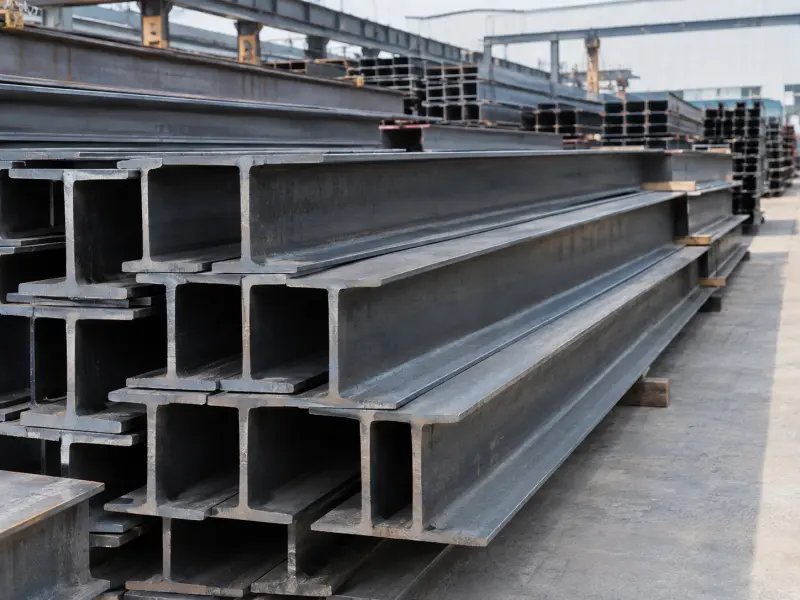
A992 steel beams are commonly specified for building structural W-shapes. A572 Grade 50 steel beams may be suitable for qualifying structural shapes when permitted by the design specification.
The two grades should not be substituted solely because both have a 50 ksi minimum yield strength. Before ordering, confirm the required beam designation, dimensions, length, quantity, and material certification.
A572 vs A992 Price: What Affects Steel Beam Costs?
There is no universal rule that A572 Grade 50 beams are always cheaper than A992 beams. The quotation depends on the required section and order conditions.
- Beam size and unit weight: Different sections have different weights per metre or foot.
- Material grade: Required standards and certification affect sourcing options.
- Availability and lead time: Common sections may have different delivery schedules from less frequently ordered sizes.
- Order quantity: Bulk volume, mixed sizes, and cutting requirements affect the quotation.
- Documentation and delivery: MTC requirements, inspection, export packing, and shipping affect total purchasing cost.
When comparing an A572 vs A992 price quotation, compare the same beam section, length, quantity, certification requirements, and delivery terms.
A992 vs A572 Grade 50: What to Confirm Before Ordering
Before purchasing structural steel beams, confirm:
- Material standard: ASTM A992/A992M or ASTM A572/A572M Grade 50
- Beam section: H beam, I-beam, or specified W-shape designation
- Dimensions and length: Section size, unit weight, and cutting requirements
- Quantity: Total order volume and any mixed-size requirements
- Documentation: Mill Test Certificate (MTC) and specified inspection requirements
- Delivery: Packing, destination, and required delivery date
The purchase order should clearly state the required grade and product standard. Any proposed material substitution should be approved by the responsible engineer or project authority.
Request a Quote for Structural Steel Beams
Shuang’ao supports structural steel sourcing enquiries for project and bulk purchasing. Send your required steel grade, beam section, dimensions, lengths, quantity, and delivery destination to confirm suitable supply options, documentation, and lead time.
Contact Shuang’ao to discuss your A992 or A572 Grade 50 steel beam requirements.